
The World Map
One globe, one enemy, and a squad that may not come home.

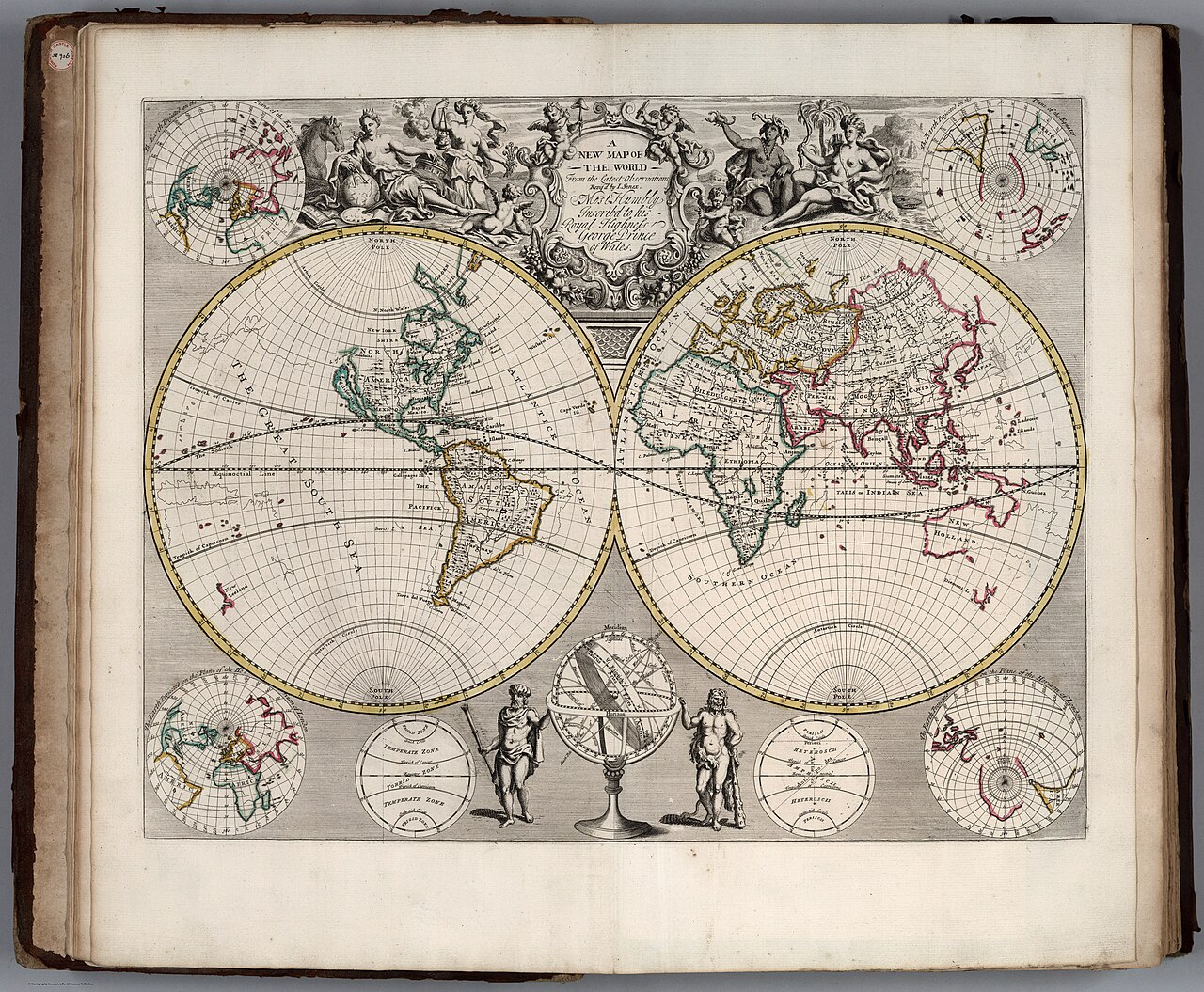
Thomas Kitchin · Public domain
The World Map is the strategic layer of the XCOM franchise, serving as the player's primary interface for tracking alien activity across Earth and directing XCOM squad operations. Represented as a rotating three-dimensional globe in the modern titles (XCOM: Enemy Unknown, XCOM: Enemy Within, XCOM 2) and as a two-dimensional hex grid in the original 1994 game, it is the command center through which the player monitors UFO sightings, allocates resources, and commits soldiers to tactical engagements. In XCOM 2, the map takes on a darker, more oppressive tone, depicting a world under ADVENT's occupation with the ADVENT Barrier visible as a large wall-like structure on Earth's surface, not a planetary ring or cage. Across the franchise, the World Map functions as both a logistical dashboard and a narrative canvas, shifting in visual language to reflect whether the player is fighting an incipient alien incursion or a full-scale occupation.
- Type
- Strategic gameplay layer (global overview)
- First appears
- XCOM: UFO Defense (1994, North America) / UFO: Enemy Unknown (1994, Europe), MicroProse
- Modern presentation
- 3D rotating globe (XCOM: Enemy Unknown, XCOM: Enemy Within, XCOM 2)
- Original presentation
- 2D hex-based map (XCOM: UFO Defense / UFO: Enemy Unknown)
- Developers (reboot series)
- Firaxis Games
- Primary function
- Alien activity tracking, mission deployment, resource and base management
Lore & Background
In the XCOM universe, the World Map is not merely a screen but the operational heart of humanity's resistance. From the command deck of the XCOM headquarters, analysts feed satellite telemetry, intercepted signals, and ground-level reports into a single global display. Red blips pulse where alien craft have entered atmosphere; green markers indicate XCOM outposts or allied installations. The commander's task is to read those blips, weigh the risk of a lost squad against the cost of an unchecked alien advance, and commit forces before the window closes. In the original 1994 title, the map was a flat hex grid covering Earth's landmasses, with UFOs represented as simple icons that the player could intercept by routing a squad. The 2012 reboot by Firaxis transformed this into a fully rendered, rotatable globe with visible continents, oceans, and atmospheric effects, making the scale of the threat feel more visceral. XCOM 2 pushed the aesthetic further: the globe is darker, the alien presence more pervasive, and the ADVENT Barrier—a large wall-like structure on Earth's surface—reinforces the narrative that humanity is no longer defending against an invasion but living under one. The map also carries narrative weight beyond mechanics. In XCOM 2, the base game does not feature systematic obscuring or misreporting of alien activity on the world map; instead, the player relies on the resistance's own infrastructure to gather intelligence. The World Map thus becomes a contested information space, not just a tactical board.
In Their Own Story
The command deck hums with the low thrum of server racks. Commander Vasquez rotates the globe slowly, her reflection ghosting across the darkened Atlantic. Three red markers blink over the southern hemisphere—UFOs, drifting, patient. Her analyst calls out coordinates, casualty projections, the fuel cost of a long-range deployment. Vasquez taps the screen. Two squads. Not three. She cannot afford three. The globe keeps turning, indifferent, and the red blips wait where they are, because they know she is watching, and they know she is running out of time.
Reader's Guide
FIELD REPORT — WORLD MAP (STRATEGIC LAYER)
Physical presentation: In XCOM: Enemy Unknown and XCOM: Enemy Within, the World Map is a fully rendered 3D globe of Earth. Continents, coastlines, and ocean textures are visible. The player rotates and zooms the globe with mouse or touch input. Alien activity appears as pulsing red or orange markers; XCOM installations show as green or blue icons. The HQ location is pinned to a continent. In XCOM 2, the globe is darker in palette, the Iron Curtain renders as a translucent energy ring around the planet, and Shadow Network nodes appear as additional markers. In the 1994 original, the map is a 2D hex grid of landmasses with simple sprite icons. Gameplay function: The World Map is where the player deploys squads to intercept UFOs, respond to alien activity, and conduct special missions. It constrains operations through distance (squad travel time), limited concurrent missions, and the risk of losing soldiers to a failed engagement. It unlocks strategic decisions: where to build, which threats to prioritize, whether to accept a loss to preserve a squad. Narrative weight: The map is the player's primary lens on the war. In EU/EE, the growing density of alien markers conveys escalating threat. In XCOM 2, the Iron Curtain and Shadow Network presence reframe the map as a prison rather than a battlefield. Cross-title shift: 1994 hex grid → 2012/2013 photorealistic 3D globe → 2016 stylized, darker globe with occupation overlays → Chimera Squad narrows scope to regional city navigation.
Did You Know?
- The original 1994 XCOM used a flat 2D hex grid for its strategic map, while the 2012 Firaxis reboot replaced it with a fully rotatable 3D globe of Earth.
- In XCOM 2, the ADVENT Barrier—a large wall-like structure on Earth's surface—is rendered as a visible structure on the World Map, reinforcing the occupation narrative.
- In XCOM: Chimera Squad, the strategic scope narrows significantly: instead of a
Gallery
Frequently Asked Questions
What is the World Map in XCOM?
It is the strategic overview screen that shows you the entire planet and where alien activity is occurring. Every major call—where to deploy your squad, how to split your budget, which base module to construct—flows through this single interface before you ever step into a firefight.
How does the World Map's presentation differ between XCOM titles?
The 1994 MicroProse original rendered Earth as a flat, two-dimensional hex-grid board, while the Firaxis reboot series (Enemy Unknown, Enemy Within, and XCOM 2) replaced that with a spinning three-dimensional globe you can rotate and zoom. The shift turned the planet from a static puzzle into something that feels alive and actively hostile.
What can I actually do on the World Map?
You track incoming UFOs, commit soldiers to intercept missions, allocate research and manufacturing resources, and manage base infrastructure. It is the 'big picture' layer that sits above turn-based tactical combat and determines which fights you even get the chance to have.
Why is the World Map considered the heart of XCOM's strategy?
It is the layer where the real long-term pressure builds: every UFO you ignore, every soldier you commit too early, and every resource you misallocate all play out here before the tactical screen loads. Fans often say you win or lose the war on this globe, because the tactical fights are merely the execution of decisions made at this level.
How does XCOM 2 change the World Map's tone?
The globe is set against a world already under the Shadow Network's grip, so the mood shifts from 'we are the ones striking back' to 'we are a resistance barely holding on.' Alien activity is more aggressive, the visual presentation carries a heavier, more oppressive weight, and the sense of a planet slowly being consumed is baked into the interface itself.
More in World & Locations
Elsewhere in the XCOM universe
Spotted an error? Know more?
This is a living reference — every entry is fact-audited, and reader corrections feed straight into our audit queue. Suggest an edit · See this site's audit record